As Featured in Healthing: Advancing Equity in Chronic Disease Care for Women in Canada with Andrea Loewendorf
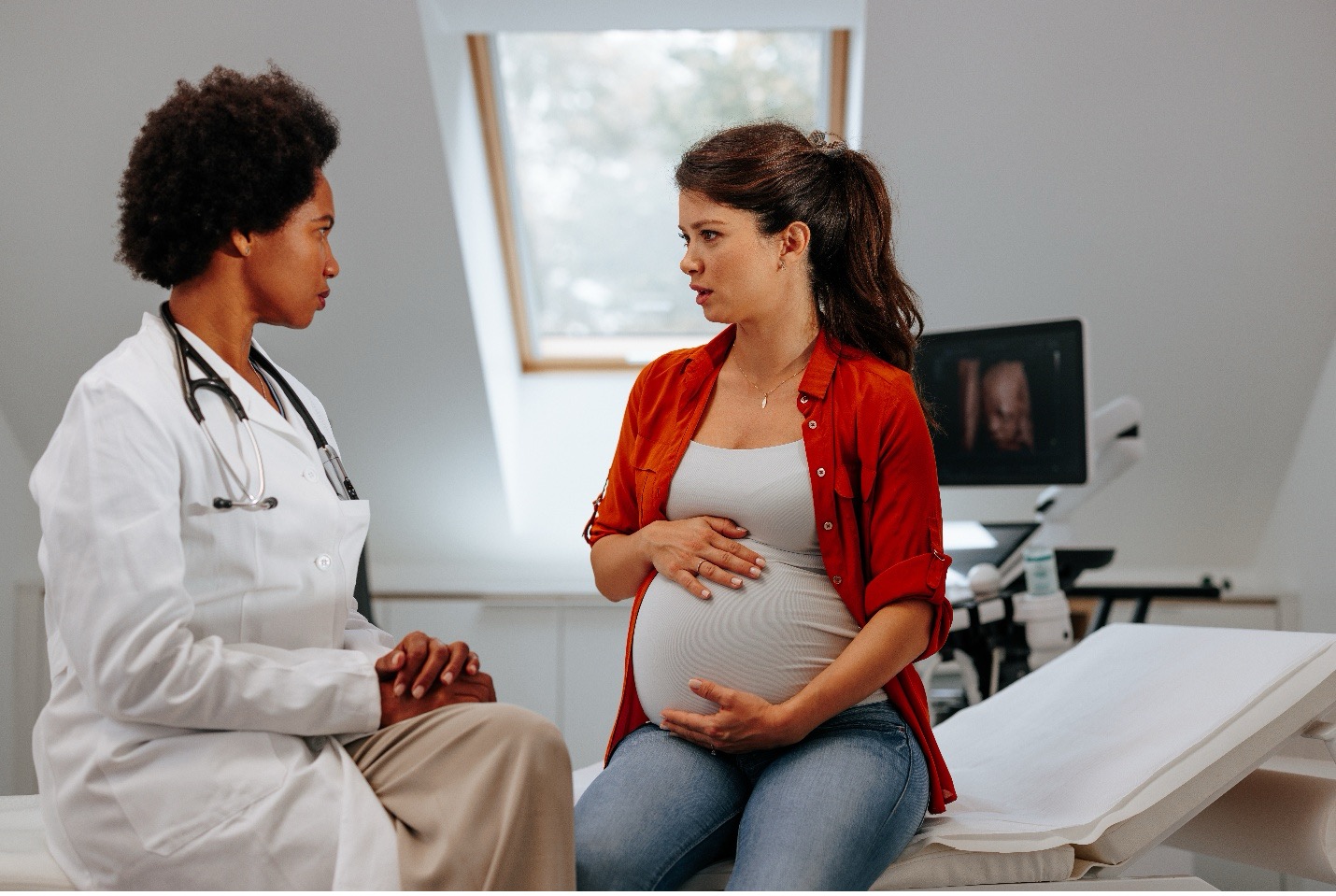
Why Women's Health Research Matters
"Women with chronic conditions during their reproductive years deserve care informed by evidence, real-world data, and their lived experience."
That is the central message from Andrea Loewendorf, Head of Immunology at UCB Canada, in a recent opinion piece published in Healthing exploring the persistent care gap facing women living with chronic illness.
Chronic diseases affect more than 14 million Canadians and remain a leading cause of disability and death.i,iiNearly half of women will develop one or more chronic conditions in their lifetime, yet much of the evidence guiding care has not been designed with women in mind.ii
This gap is especially evident during pregnancy, where treatment decisions often must be made without the data needed to fully inform patients and healthcare providers.
A Critical Evidence Gap
In Canada, one in four pregnancies is impacted by a chronic condition,iiiyet there remains limited safety and efficacy data to guide treatment decisions during pregnancy and breastfeeding.
In fact, fewer than five per cent of medications have been adequately studied in these populations,iv leaving clinicians and patients to navigate important healthcare decisions with limited evidence.
The result is a persistent health equity gap that can contribute to delays in care, inconsistent treatment approaches, and avoidable risks for women and their babies.

Building a More Inclusive Future
Closing this gap will require more inclusive research design, stronger integration of sex- and gender-based analysis, and greater representation of women, across all stages of clinical research.
It also requires collaboration across researchers, clinicians, regulators, industry, and patient communities to ensure evidence reflects real-world experiences and healthcare needs.
The Role of Innovation and Collaboration
Digital health tools and evolving models of care offer new opportunities to strengthen data collection, improve continuity of care, and support more informed clinical decision-making throughout a woman's health journey.
While progress is being made, women remain underrepresented in clinical research, particularly during pregnancy. Addressing this challenge is essential to ensuring future healthcare decisions are grounded in evidence that reflects the realities of all patients.
At UCB Canada, we are dedicated to closing the gender health equity care gap by developing practical solutions and partnering across the healthcare ecosystem to drive impactful change.
Read the full article originally published on Healthing’s website here.
[i]Statistics Canada. Health outcomes. Published 11 March 2025. Available from: https://www150.statcan.gc.ca/n1/pub/82-570-x/2024001/section2-eng.htm#a3_1.
[ii] Canadian Public Health Association. Chronic Disease and Public Health in Canada. Available from: https://www.cpha.ca/chronic-disease
[iii]Government of Canada. Pregnancy in Canada – infographic. Public Health Agency of Canada. Published January 27, 2020. Available from: https://www.canada.ca/en/public-health/services/publications/healthy-living/pregnancy-canada-infographic.html
[iv]Illamola S M et al. Inclusion of pregnant and breastfeeding women in research – efforts and initiatives. Br J Clin Pharmacol. 2017 Oct; 84(2): 215-222.