Reimagining Winnie-the-Pooh Through the Experiences of Canadians Living with Myasthenia Gravis
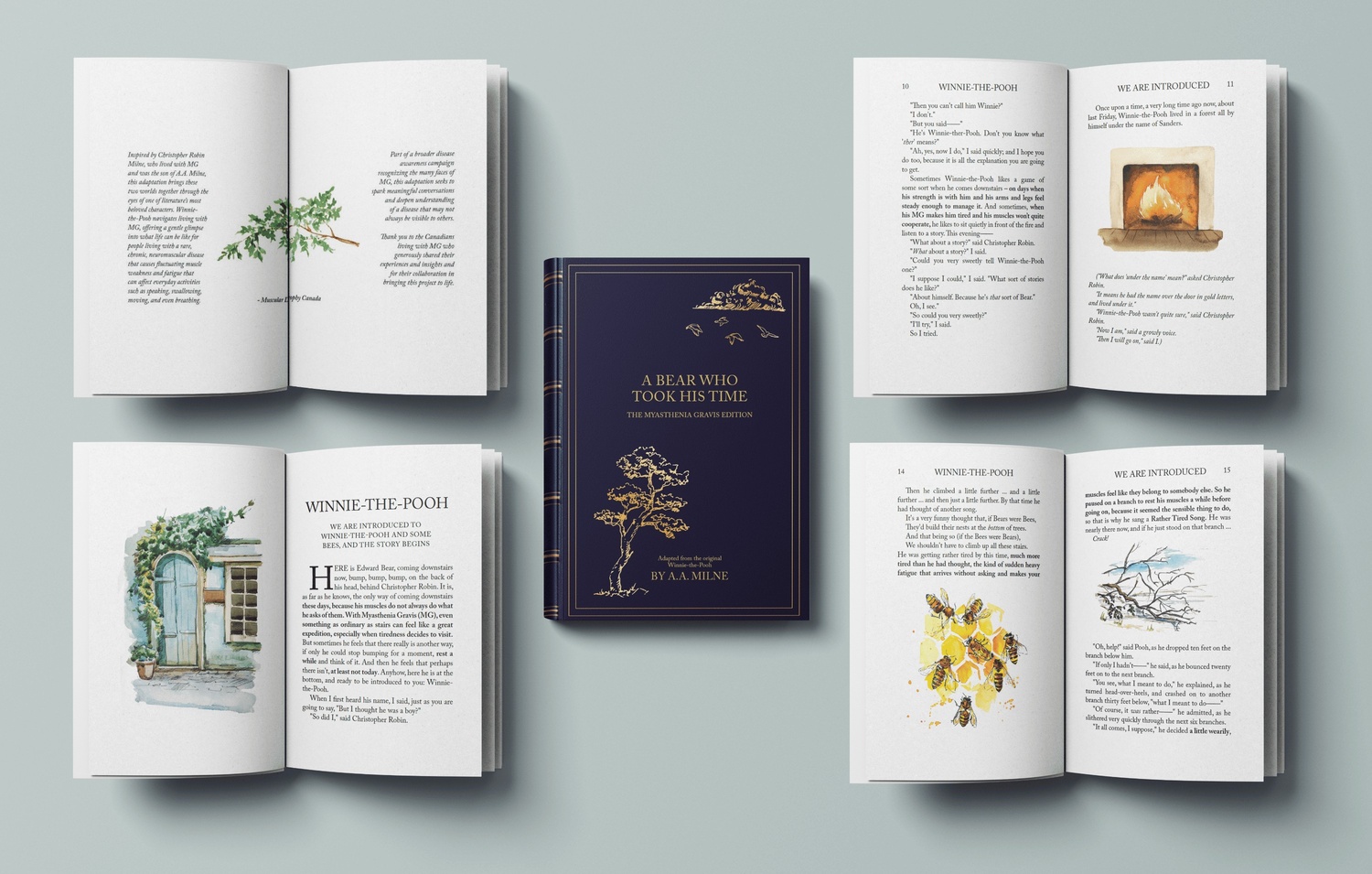
For 100 years, Winnie-the-Pooh has reminded readers of the value of friendship, kindness, and finding joy in life's simplest moments. This year, as Canadians recognize Myasthenia Gravis (MG) Awareness Month, readers around the world celebrate the centennial of A.A. Milne's beloved bear. Bringing these two stories together, UCB Canada and Muscular Dystrophy Canada (MDC) are delighted to present A Bear Who Took His Time: The Myasthenia Gravis Edition.1
A little-known piece of literary history is that Christopher Robin Milne – the son of A.A. Milne and the real-life inspiration behind Christopher Robin– lived with myasthenia gravis. Inspired by this knowledge, the commemorative adaptation reimagines the first chapter of Winnie-the-Pooh through the lens of living with MG today.
Created in collaboration with Canadians living with MG, the non-promotional disease awareness project offers readers a gentle and relatable introduction to a disease that is often misunderstood and largely invisible to others.
Helping Readers See What Isn't Always Visible
Myasthenia gravis (MG) is a rare, chronic, neuromuscular disease that causes muscle weakness and fatigue.2 Symptoms can affect speaking, swallowing, moving, and breathing, often fluctuating throughout the day.3
Because many of its symptoms are not immediately visible, people living with MG are often navigating challenges that others may not fully understand. Through this adaptation, familiar moments from Pooh's adventures take on new meaning, helping readers better appreciate the realities of living with this rare disease.4
An Excerpt from the Independent Commemorative Chapter
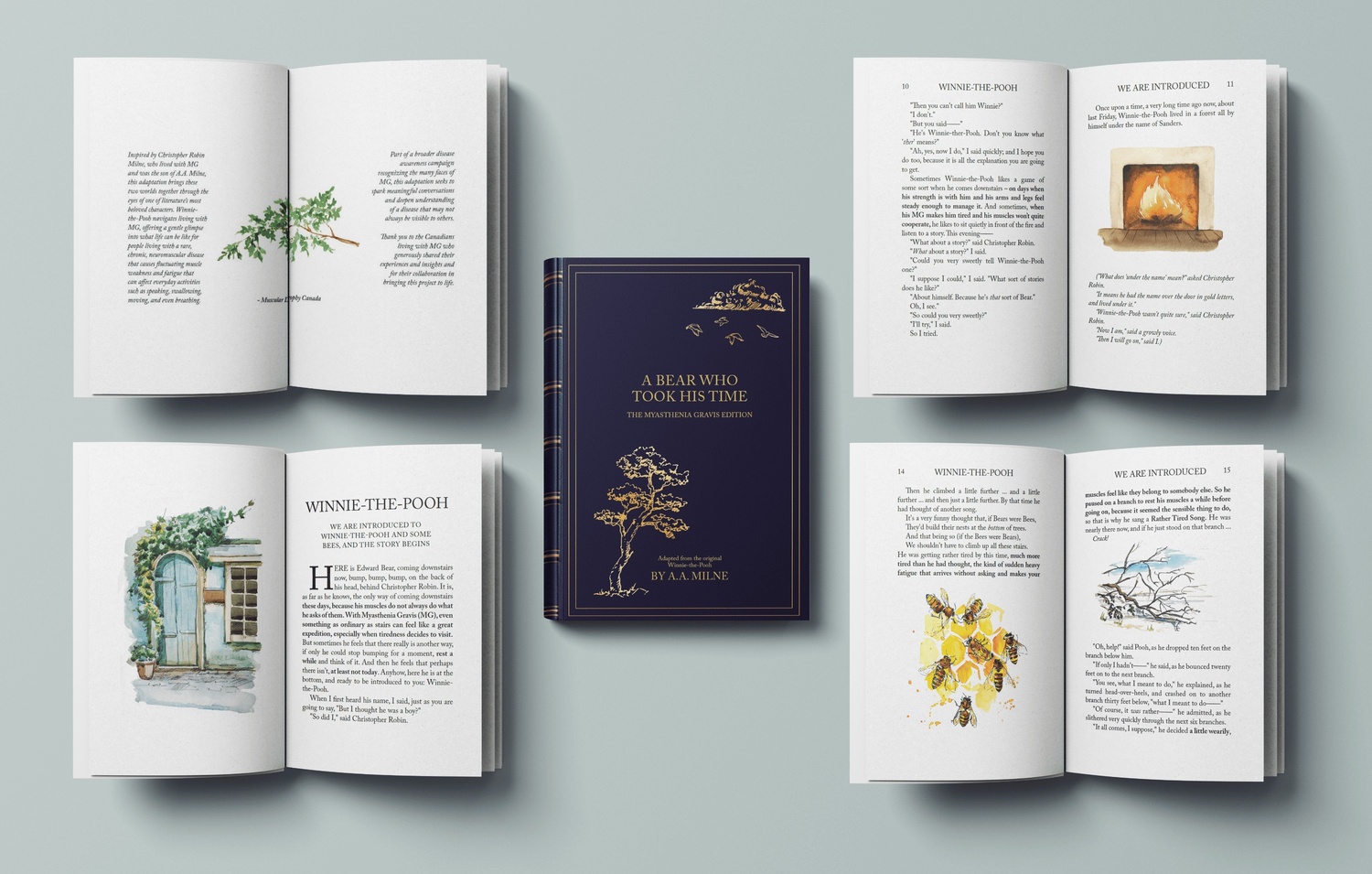
Seamlessly blending with the original narrative by A.A. Milne, the reimagined additions stand out in bold text, clearly communicating the experiences shared by Canadians living with MG.
"Here is Edward Bear, coming downstairs now, bump, bump, bump, on the back of his head, behind Christopher Robin. It is, as far as he knows, the only way of coming downstairs these days, because his muscles do not always do what he asks of them. With Myasthenia Gravis (MG), even something as ordinary as stairs can feel like a great expedition, especially when tiredness decides to visit. Sometimes he feels that there really is another way, if only he could stop bumping for a moment, rest a while and think of it. And then he feels that perhaps there isn't, at least not today. Anyhow, here he is at the bottom, and ready to be introduced to you: Winnie-the-Pooh."
At its heart, Winnie-the-Pooh has always been a story about friendship. In this adaptation, that theme takes on new significance. Whether helping Pooh through a difficult day or supporting him when his strength fades, the character Christopher Robin and his friends reflect the vital role that caregivers, loved ones, healthcare professionals, advocacy organizations, and communities play in the lives of people living with MG.
Bringing Real Experiences into the Hundred Acre Wood
The adaptation was developed in collaboration with Canadians living with MG, whose experiences helped shape the story's portrayal of fatigue, fluctuating strength, and the everyday realities of navigating a disease that can be difficult for others to see.
We extend our sincere thanks to the individuals who generously shared their stories and insights, helping ensure the adaptation remained grounded in the lived experiences of Canadians affected by MG.
A Community Behind the Story
Muscular Dystrophy Canada has long supported Canadians affected by neuromuscular disorders through advocacy, education, research, and community programs. Together with UCB Canada and the MG community, the organization helped ensure that patient voices remained at the heart of this initiative.
One hundred years after readers first stepped into the Hundred Acre Wood, Winnie-the-Pooh continues to create connections in unexpected ways.
Through the voices of Canadians living with MG, this familiar story is helping foster empathy, spark conversation, and remind us of something Pooh has always known: no journey is meant to be faced alone.
Download the commemorative chapter and learn more about MG here
To learn more about myasthenia gravis and support available for Canadians living with the condition, visit Muscular Dystrophy Canada and Myasthenia Gravis Society of Canada.
References
1. MG United. Myasthenia Gravis: A Living History. Last Accessed: June 18, 2026. Available at: https://www.mg-united.com/disease-and-treatment/myasthenia-gravis-a-living-history.
2. Muscular Dystrophy Canada. Myasthenia Gravis. Last Accessed: June 18, 2026. Available at: https://muscle.ca/myasthenia-gravis/.
3. National Institute of Neurological Disorders and Stroke (NINDS). Myasthenia Gravis, March 13, 2026. Last Accessed: June 18, 2026. Available at: https://www.ninds.nih.gov/health-information/disorders/myasthenia-gravis
4. Breiner A, Widdifield J, Katzberg HD, Barnett C, Bril V, Tu K. Epidemiology of Myasthenia Gravis in Ontario, Canada. Neuromuscular Disorders. 2016;26(1):41-46. https://doi.org/10.1016/j.nmd.2015.10.009.